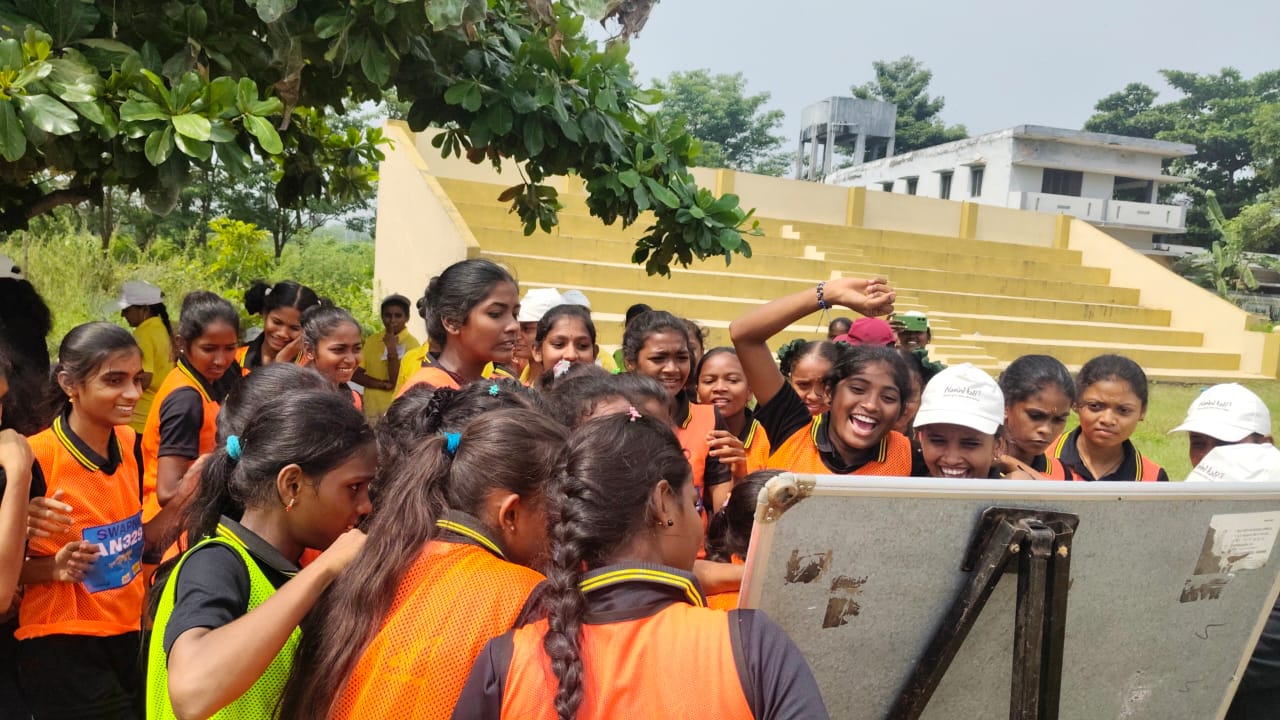
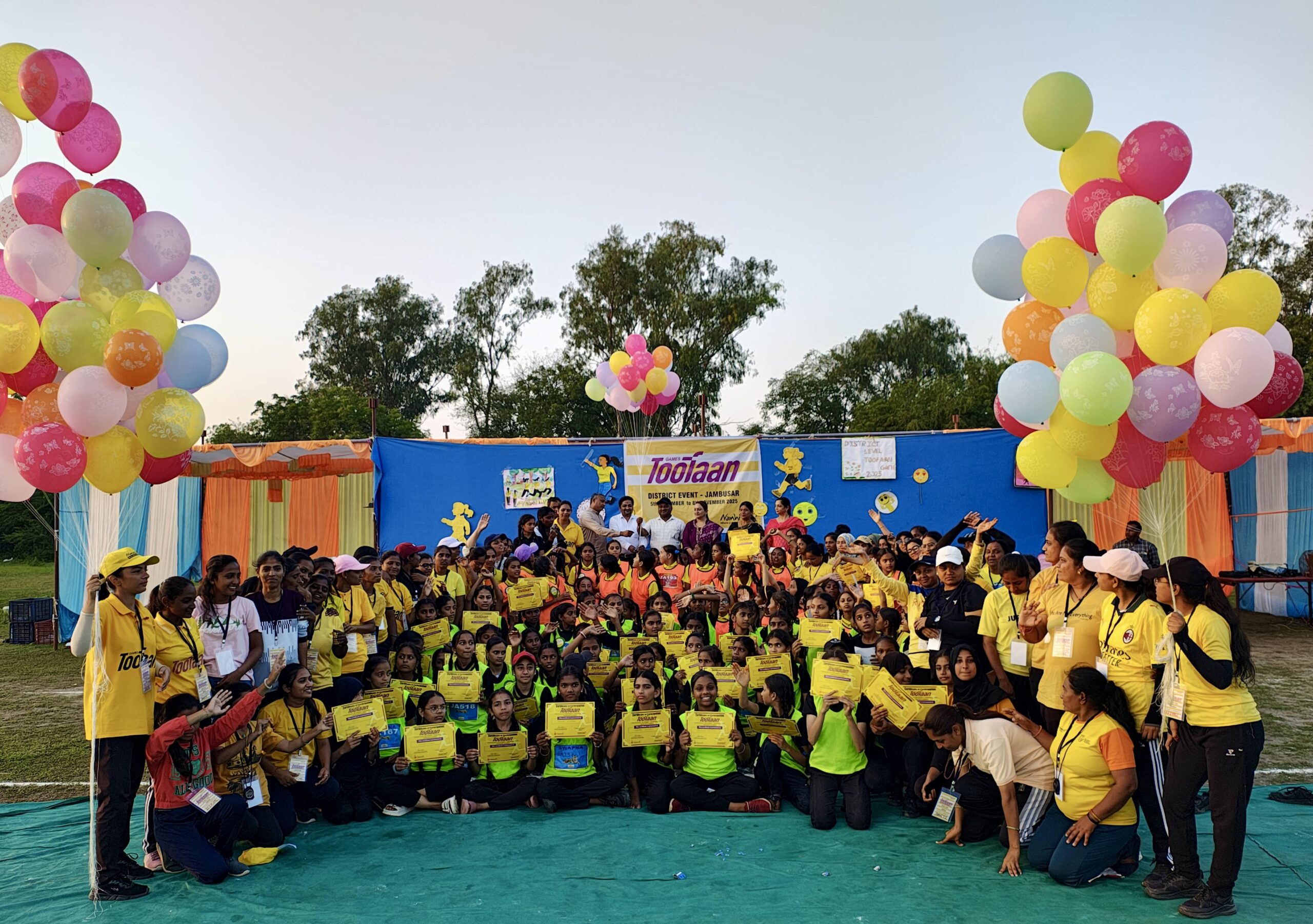
As 2026 greets us, the air is buzzing with New Year celebrations and resolutions, as well as anticipation for the upcoming festivals of Lohri and Sankranti. For over 171,000 Nanhi Kalis, though, a unique kind of festive spirit burns brightly across thousands of villages in 17 districts and 7 states of India—a collective surge of energy and sportswomanship as the girls have been running and jumping through their own season of athletics: the Toofaan Games.
Toofaan Games begins at the village-level, bringing together Nanhi Kalis to compete in four athletics events carefully selected to test speed, lower body strength, agility, and endurance. While every girl is cheered on by her friends to push her limits, do her best, and have fun, only the girls with the highest scores from the village-level games proceed to partake in the district-level games. Alongside these girls at every race, every event, are their Skills Associates— young women from the same villages, who know the girls, their families, and their daily realities and challenges intimately.
As core leaders of Project Nanhi Kali, these Associates provide the girls with after-school academic and sports sessions on a daily basis, making them trusted, relatable mentors of 21st-century lessons both inside and outside the classroom. Each Toofaan season, with clipboards, whistles, and stopwatches in hand, the Associates put their own training in coaching, logistics, and score-keeping to the test. As the village and district games progress, the Associates sharpen their own proficiency and confidence in sports-event management, while the Nanhi Kalis strive to qualify for the national Toofaan Games final.
In mid‑December, in the very eye of this athletics “Toofaan” (meaning storm), our leadership team received news that felt like a perfect tribute to this season of athletics: Project Nanhi Kali had been awarded Grassroots Sports Initiative of the Year at the CII Sports Business Awards 2025.
Naandi is deeply grateful for this award as a validation of the programme’s impact, but more importantly, as a reminder of why it is so important to continue it. For many Indian girls, especially those from under-privileged families and communities, “physical poverty” is a shared, lifelong reality experienced as limited freedom to move, care for, and enjoy their own bodies. They are rarely encouraged to run, jump, and play freely outside, or to wear comfortable sports clothing. Guidance on nutrition during puberty, menstruation, and pregnancy is often scarce, and sports are rarely suggested as a form of stress relief, a strength-building exercise, or a viable career path. The enriching, often life-changing world of physical activity, remains closed off to them.
Project Nanhi Kali’s sports programme, and the Toofaan Games season at large, intends to change this reality and overcome gender-based physical poverty by building an entirely girl‑centric world of sport. At the heart of this world is the diverse, well‑trained community of Skills Associates who had few or no sporting opportunities themselves, and who now ensure that a sports ecosystem is vibrant, safe, and inclusive for hundreds of thousands of girls. With humility, we acknowledge them as the driving force behind Naandi’s sports initiative and the reason it has become the award-winning programme it is today:
A girl‑centric, women‑led ecosystem – At every level, this “Toofaan” storm is made by women, for girls and women of all ages. The programme’s leadership team and more than 1,700 Skills Associates have co-created and delivered a sports curriculum aligned with global standards, reaching thousands of villages and schools in some of the country’s most remote areas. These Associates experience, and deeply understand, the daily realities Nanhi Kalis face—responsibilities with household chores, caring for siblings or elders, fears about stepping out alone, the anxiety and silence that often surrounds menstruation, and much more. The sports curriculum has been built with these realities in mind, using training modules that slowly build strength, movement, and athletics skills whilst also including educational conversations about puberty, menstruation, body literacy, and emotional well‑being. Naandi’s sports experts organise this content into monthly modules and daily sessions on the SportStar app, so that with just a smartphone, Associates can run structured practices in any village. As they use these digital tools to deliver and report on their sessions, they grow their own digital literacy and 21st‑century skills—quietly narrowing the digital gender gap as they widen girls’ access to sport.
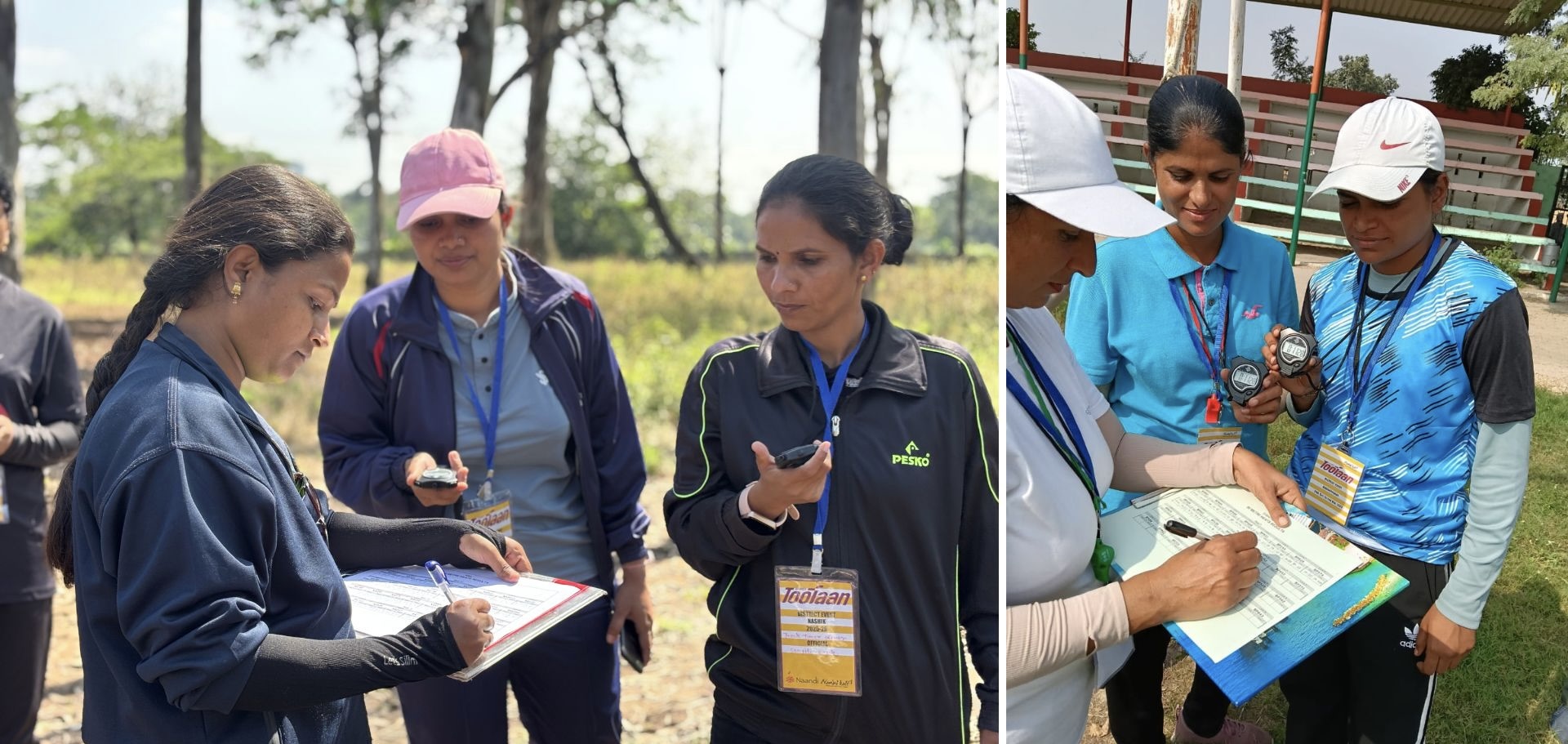
A national‑scale event powered by “ordinary” women – Because Skills Associates manage Toofaan Games end to end, rural women are literally at the helm of India’s largest athletics event for girls. What makes this even more remarkable is that most Associates do not have educational backgrounds or formal training in sport: they are homemakers, tutors, and community workers who, with mentoring and rigorous training from Naandi’s sports leadership, have grown into confident coaches and event managers. They now understand fundamental sports skills, coaching etiquettes, training drills, and competition protocols. They are the ones who set up tracks and run heats of 50‑metre sprints, endurance and shuttle runs, and standing long jumps. They maintain the rest and first‑aid zones so that girls are safe and cared for, record and verify every score, and perform thorough score analyses to determine lists of finalists, all the while ensuring fairness. Many of these women had never seen a national‑level tournament before Toofaan Games, yet they now run one—proving that formal titles are not a prerequisite for excellence. With months of training, deep commitment, and trust in their communities, they have built and sustained a national‑style athletics competition for girls entirely from the ground up.
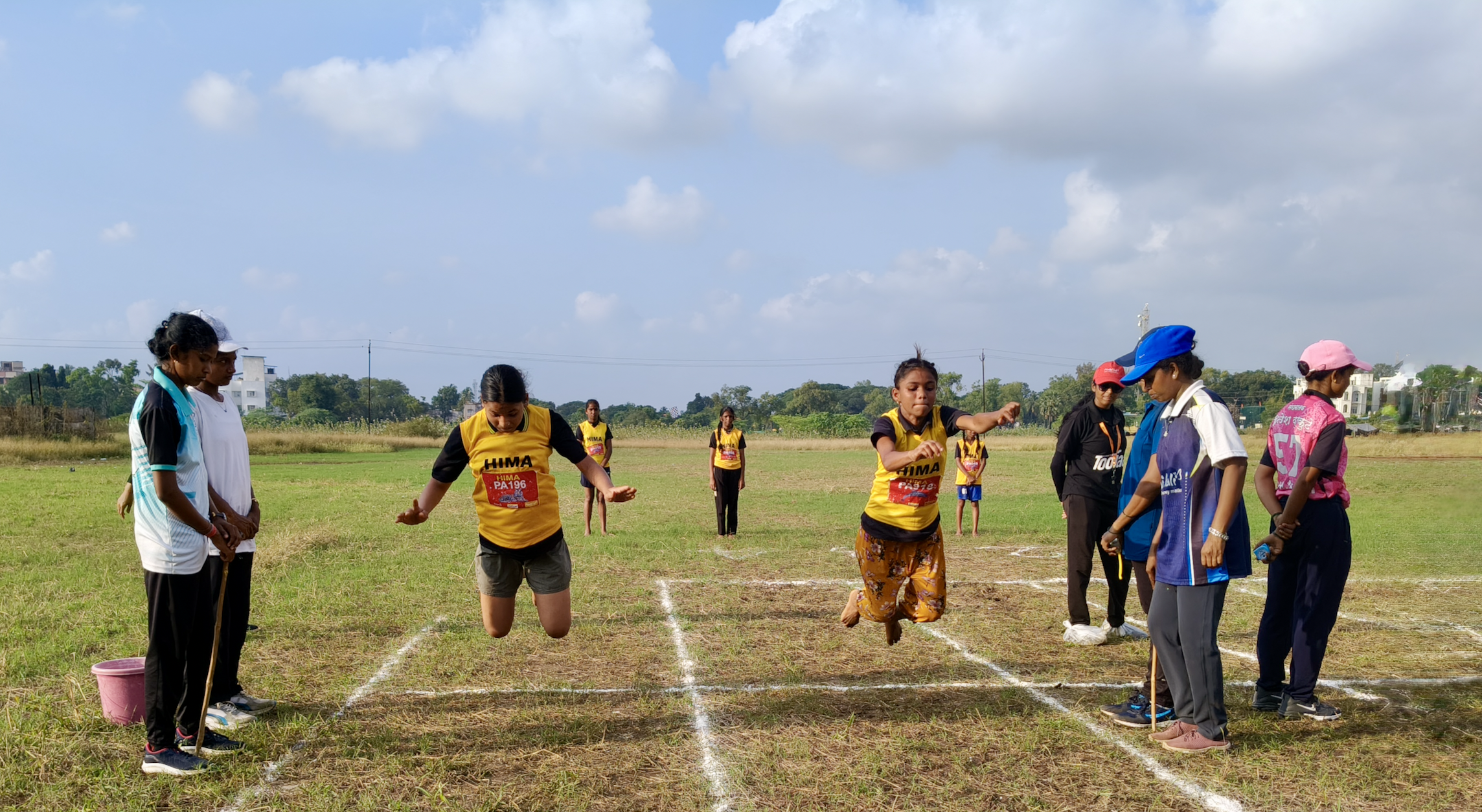
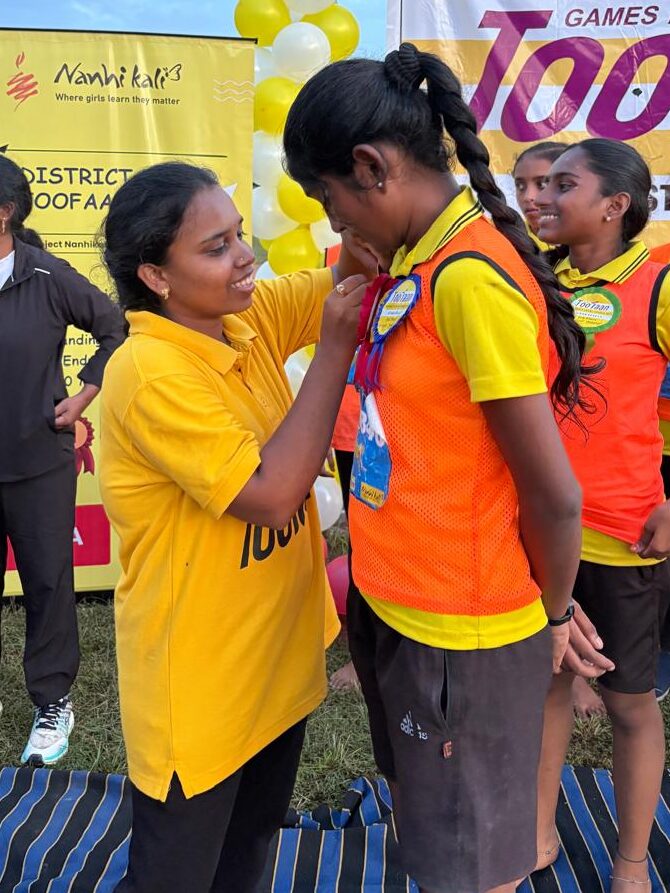
Changing who gets to dream about and enjoy sports – A true sense of the programme’s impact comes alive through the stories the Nanhi Kalis and Associates tell about their unique sports journeys. Girls talk about how they ran faster or jumped further this season, how they feel less afraid, stronger, in their bodies, and most importantly, how much fun they had with their friends! The Associates, in turn, who once hesitated to prepare for and lead in-field sports sessions, now manage entire blocks of athletics events, compile scores and lists of finalists, and stand on the awards podium to hand Nanhi Kalis their certificates and trophies. As more girls and women take charge and assert their skills through Toofaan Games, two generations of women—participating as players, coaches, and organisers—are enriching their lives, their very minds and beings, with the benefits of movement.
Project Nanhi Kali’s award belongs first and foremost to the Associates: the rural women, who despite having no formal sports qualifications, manage tiered athletics competitions that reach and uplift spirits of 171,000 girls. They are the true Toofaan Makers, driving a sports storm that refuses to let another generation of girls grow up without the joy of sports. Through their passion, dedication, and loyalty to the Nanhi Kalis, they ensure this storm gathers in strength, speed, and impact every time a girl sprints down a lane drawn by an Associate’s hand. With each new Toofaan season, women and girls are redrawing the boundaries of who gets to be strong, who gets to lead, and who gets to dream of achieving and surpassing their goals within the world of Indian sports.