
In today’s rapidly shifting job market, technical knowledge and a perfect resume are no longer enough to secure a young person’s future. Employers still seek qualified individuals with field-specific experience, of course, but they look for something more: adaptability, confidence, effective communication, a results-oriented work ethic, creative problem-solving, and the ability to work independently as well as collaboratively. These are the marks of 21st-century employability.
Naandi’s Job Factory programme—a nationwide youth employability ecosystem run in partnership with corporations such as Mahindra & Mahindra, Titan Company, and L’Oréal—has evolved specifically to prepare young people for this new reality. Beyond offering sector-specific training in retail, IT, hospitality, teaching, cosmetology, and more, our programmes create learning spaces that offer something rarer but more essential: room for young people to reflect, think, debate, articulate their ideas, and, most importantly, aspire towards and create futures that feel genuinely their own.
In India today, college degrees are widespread amongst the young population, but confidence is unevenly distributed. This is because many learners come from underprivileged backgrounds and are often the first generation in their family to attend college. Not only are they likely to be juggling part-time work and contributing to household chores and responsibilities, but they also seem to carry a private mental inventory of “can’t” and “shouldn’t”—internalised beliefs that weigh them down. These self-limiting beliefs often form over years spent in classrooms where personal struggles went unnoticed, or in households where responsibilities overshadowed self-discovery. Across our multiple programmes, students frequently tell us they have never been in educational spaces where it felt okay to ask questions, make mistakes, or admit confusion. For them, learning competencies like confidence, communication, or critical thinking are often newer—and more intimidating—than learning any technical content.
At its core, the Job Factory programme designs 21st‑century curricula and equips thousands of Trainers with both technical skills and the sensitivity needed to deliver these curricula and support young people as they build confidence and personal capacities. Trainers carry the programme’s most important daily work: teaching students to learn and unlearn, think independently, collaborate with empathy, and approach challenges with a growth mindset. This helps students build resilience alongside the ability to recover from setbacks, persist through difficulty, and reframe fear as an opportunity for growth. Education, in this approach, is not defined merely by what a student knows, but by who they become through the learning process.
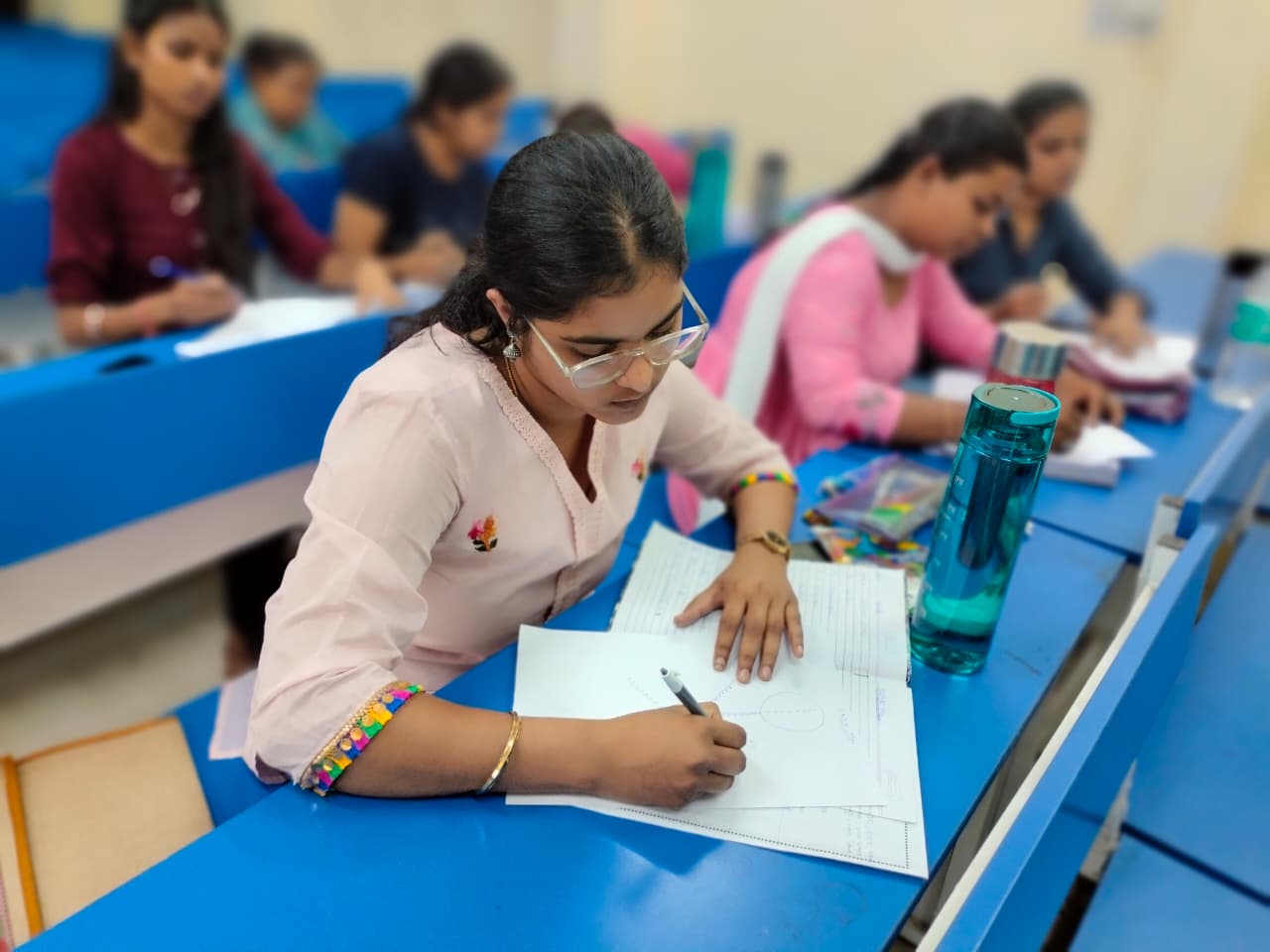
Because personal development is not something many youth have been taught, their early days in Naandi’s Job Factory programmes can be filled with hesitation. Trainers see the same pattern each time a new batch of students arrives: lowered eyes, soft voices, stiff postures, and reluctance to speak for fear of making a mistake. Yet something begins to shift once a programme’s carefully curated environment takes hold. Lessons feel like conversations rather than lectures. Mistakes become raw material for learning to improve oneself instead of evidence of inadequacy. A fumbled answer becomes an important study of personal enquiry; a forgotten English word becomes an opportunity to pause, breathe, and reset without shame. Slowly, fear softens. Hesitation loosens. Voices and articulated thoughts become steadier, and more succinct. The programme’s diverse technical and job‑readiness modules—covering Tally, Excel, Python, email and workplace etiquette, professional grooming, resume building, and more—remain central and are mapped closely to employer expectations. They coexist with the steady building of confidence, nurtured and reinforced by Trainers and peers who often grow into trusted mentors and friends.
One powerful example of such personal development is Pragya Sahu, a young woman from Chhattisgarh. She grew up in a modest, traditional household where her father ran a small shop and her mother managed the home. Determined not to add to the family’s financial strain, Pragya helped in the shop after college and kept her personal expenses to a minimum. Beneath her quiet exterior, however, she carried a clear aspiration: to secure a stable job, support her younger siblings, and share in the responsibilities her father shouldered alone. Yet her ambitions frequently collided with fear. She doubted her abilities, struggled with English, and felt acute anxiety at the idea of interviews. These were not gaps in intelligence—they were gaps in confidence.
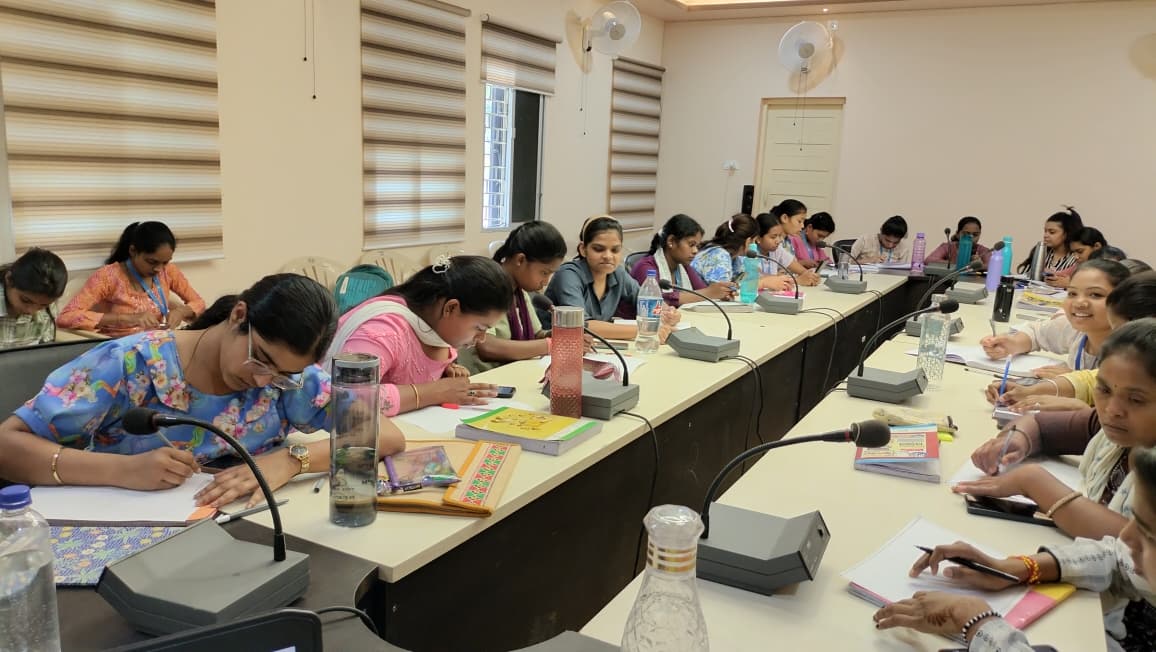
Her turning point came when she enrolled in the ‘Employability and Life-Skills’ training programme run by Naandi. For Pragya, stepping into this classroom felt like entering a different world of learning. Gone were the monotonous lectures and the pressure to compete. Instead, she encountered warmth, interactivity, shared vulnerability, and unwavering encouragement to confront and overcome challenges. The creatively delivered lessons invited her to participate, reflect, speak up, try again, and gradually shed the hesitation that had accompanied her for so long.
Over the 40 hours of the programme, Pragya learned to introduce herself in English without fear, contribute confidently to group discussions, deliver presentations she once thought impossible, and perform impressively in mock interviews. She created a thoughtful two-year career plan and learned to manage her time and finances with new independence—an essential milestone on the road to adulthood. More profoundly, she discovered that her ambitions were valid. For the first time, she genuinely believed she could pursue a future she had once considered unattainable.

Pragya’s journey runs in parallel to those of thousands of young people across India who enter Naandi’s classrooms unsure of themselves. After each Job Factory session, and after completing their chosen course, these youth emerge with clarity, dignity, and a renewed sense of possibility. Their growth is shaped by life-skills modules, digital and communication training, exposure to workplace expectations, and—crucially—the steady presence of Trainers who recognise their potential long before the learners recognise it themselves.
One such trainer is Priyanka Sharma from Maharashtra, who has trained nearly 9,000 students since 2020. Her classrooms are known for their energy, empathy, and disciplined yet nurturing atmosphere. She reflects: “Students don’t walk into our classroom for skills alone. They come carrying fear. And every day, our job is to replace that fear with confidence.” This belief sits at the heart of Naandi’s Job Factory programme: technical skills matter but transforming a young person’s relationship with themselves is what truly unlocks their future.
With each new batch of learners, Naandi continues to build a new kind of environment for employability training—one where personal transformation and professional readiness advance together, and where every young person is invited to step boldly into a future they can finally and fully call their own.